Strong civic education depends on more than coverage and pacing guides. It depends on educators who continue to think seriously about the ideas beneath our work, including justice, leadership, character, and the responsibilities we carry in shaping young citizens. Opportunities that allow teacher leaders to step back from daily demands and re-enter those conversations are not indulgences. They are essential.
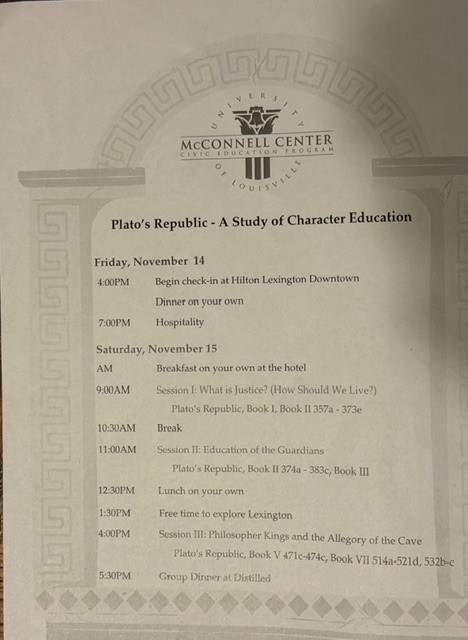
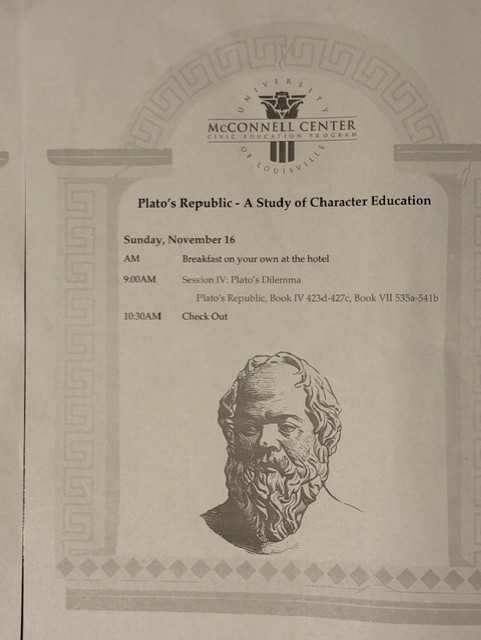
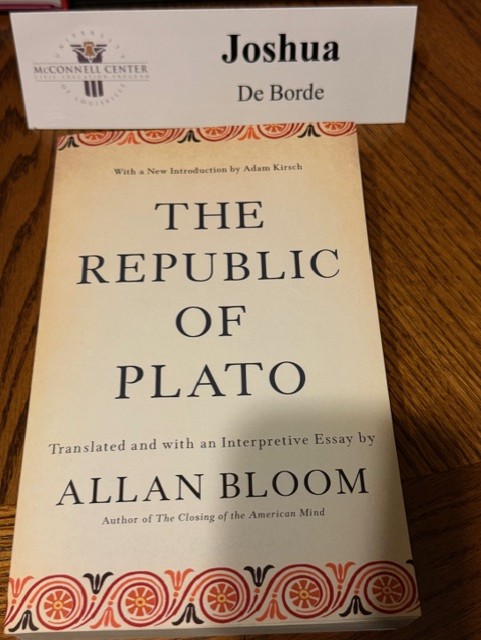
This fall, I had the opportunity to participate in a seminar centered on Plato’s Republic, focused on character education and civic leadership. Over the course of the weekend, the experience demanded slow reading, careful listening, and sustained dialogue around enduring questions that continue to shape public life. Rather than rushing toward conclusions, participants wrestled with questions of justice, education, leadership, and the tension between ideals and lived reality.
What made the experience especially meaningful was not simply the text, but the quality of the intellectual conversation. The seminar reinforced the value of disciplined inquiry and respectful debate, habits that remain essential in both schools and civic life.
That renewal has carried directly into my professional practice. As a teacher leader, the seminar reshaped my leadership posture by reaffirming the importance of leading through ideas rather than directives. Since returning, I have been more intentional about creating space for slower, deeper questions with colleagues and administrators. These conversations invite reflection, challenge assumptions, and model the intellectual engagement we want to see across our schools.
The impact has also been evident in my AP U.S. History classroom. Discussions have become more deliberate and demanding, with students encouraged to remain with complex questions rather than rush toward surface-level conclusions. Framing civic and historical topics through inquiry rather than answers has elevated the seriousness with which students approach discussion and debate. It reinforces that civic understanding is rooted in judgment, reasoning, and character.
Experiences like this seminar matter because they remind educators why this work is worth doing well. Expanding intellectual horizons and sharing that enthusiasm with students and colleagues strengthens civic education far beyond a single lesson or unit. I left the experience renewed, energized, and recommitted to fostering thoughtful conversation and civic seriousness in both my classroom and leadership work.
Joshua M. De Borde
Barbourville Independent
District Administrator; APUSH Instructor